

Last Updated: October 26, 2026
Quick Summary
Dog hair on clothes clings through static electricity and mechanical entanglement in fabric fibers. Remove it before washing with lint rollers or rubber gloves, then use vinegar in the wash cycle and wool dryer balls to reduce static and loosen remaining hairs.
- Use a lint roller before washing to remove surface hair in one direction
- Add one cup of white vinegar to your rinse cycle to loosen pet hair from fabric
- Toss three to five wool dryer balls in the dryer to reduce static and lift remaining hairs
- Brush your dog at least three times per week during normal shedding to prevent excess hair
- Choose tightly woven fabrics like denim and canvas that repel dog hair better than fleece or brushed cotton
Table of Contents
- Why Dog Hair Sticks to Your Clothes
- 1. Use Lint Rollers and Adhesive Tools Before Washing
- 2. Pre-Treat with Vinegar in Your Wash Cycle
- 3. Add Dryer Sheets and Wool Balls to Your Laundry Routine
- Best Laundry Tools for Pet Hair Removal
- 4. Groom and Bathe Your Dog Regularly to Reduce Shedding
- How to Prevent Dog Hair on Clothes Before It Starts
- 5. Choose Fabrics That Repel Dog Hair
- Frequently Asked Questions
Why Dog Hair Sticks to Your Clothes
Dog hair clings to fabric because of static electricity and textile fiber structure. When your dog sheds, loose hairs become charged with static and attract to your clothes like magnets, worse in dry climates or winter, when humidity drops.
Some materials repel pet hair naturally; others act like velcro. Understanding this helps you choose better clothes and tackle the problem before it starts.
1. Use Lint Rollers and Adhesive Tools Before Washing
A lint roller is your first line of defense against dog hair on clothes. Use it before washing, rolling gently in one direction to lift surface hairs without damaging fabric.
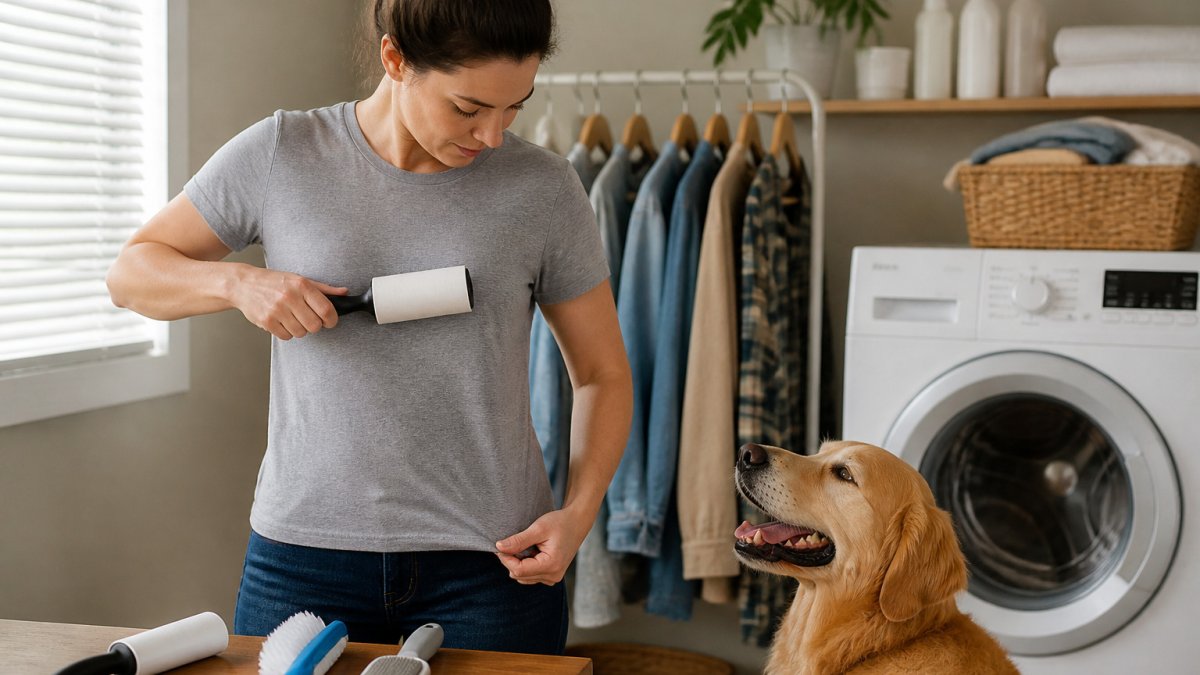
Adhesive tape works similarly: wrap it around your hand sticky side out and pat your garment. Keep lint rollers in your closet, car, and bag.
For stubborn hair:
- Use a lint roller with fresh sheets (old sheets lose stickiness)
- Roll in one direction only
- Try lint rollers with extra-sticky formulas for heavy shedding
- Keep backup rollers handy during peak shedding season
Timing matters: once hair gets wet and tangled in fabric during the wash cycle, it's much harder to remove. A quick 30-second lint roll saves frustration later.
2. Pre-Treat with Vinegar in Your Wash Cycle
White vinegar loosens pet hair from fabric. Add one cup to your rinse cycle; it softens fabric slightly so hair releases more easily during washing.
Here's how to use it:
- Pour vinegar into the fabric softener dispenser
- Run a normal wash cycle
- The vinegar smell disappears as clothes dry
- Works on most fabrics safely
Vinegar also eliminates pet odors and dander, especially useful if your dog sleeps on your bed or sits on your lap.
Vinegar lowers the water's pH, breaking the bond between hair and fibers. It's gentler than harsh chemicals and costs pennies per load.
Combine vinegar with your regular detergent, no need to choose one or the other. It works particularly well on clothes that have absorbed dog hair through multiple wears.
3. Add Dryer Sheets and Wool Balls to Your Laundry Routine
Dryer sheets reduce static electricity in the dryer, and since static cling is what makes dog hair stick, reducing it stops the problem at the source.
Wool dryer balls work even better: reusable, chemical-free, and lasting hundreds of loads. Toss three to five in with your wet clothes.
Benefits of wool balls:
- Reduce static naturally without chemicals
- Soften clothes without perfumes or additives
- Last for years (much cheaper long-term)
- Safe for sensitive skin and baby clothes
- Decrease drying time by 20-30 minutes
Dryer sheets are convenient but create waste. If you prefer them, choose unscented, scented sheets can leave residue that attracts more pet hair over time.
Use either on high heat; the tumbling action plus static reduction lifts remaining hairs. Many dog moms use both: vinegar in the wash and wool balls in the dryer.
Best Laundry Tools for Pet Hair Removal
The right tools make handling dog hair on clothes easier, and you don't need expensive gadgets. Learn how to prevent dog hair damage to clothes during washing and drying. But the tool most guides ignore is the one that quietly fills up with hair: your washing machine and dryer. Here are handheld tools worth owning plus the machine maintenance most pet-hair guides skip.
Handheld tools worth keeping
| Tool | Purpose | Best For | Cost |
|---|---|---|---|
| Lint roller | Remove surface hair | Quick pre-wash cleaning | $3-8 |
| Wool dryer balls | Reduce static | Multiple loads | $10-15 |
| White vinegar | Loosen hair bonds | Wash cycle | $3-5 |
| Rubber glove | Lift hair from fabric | Damp clothes and upholstery | $1-3 |
| Grooming brush | Reduce shedding | Before wearing | $10-25 |
| Stiff-bristled brush | Lift embedded hair | Denim, canvas, upholstery | $5-12 |
The rubber glove trick deserves special mention: put on a damp rubber glove and run your hand over your clothes, the texture lifts hair like magic and works on upholstered furniture too. A stiff-bristled brush does the same on heavier fabrics.
Why machine maintenance matters for pet owners
Pet hair doesn't just disappear down the drain. It collects in the washing machine's lint filter, door gasket, and pump trap, plus the dryer's lint screen and vent. Over time this buildup reduces cleaning performance, causes odors, and, in the dryer, creates a fire risk. If you wash hairy items regularly, build these checks into your routine.
Washing machine:
- Clean the lint filter or coin trap monthly. On most front-loaders it's behind a small access panel at the bottom front; on top-loaders check the agitator base and the drain filter if your model has one.
- Wipe the door gasket on front-loaders with a damp cloth every few weeks, hair and dander collect in the folds and cause mildew.
- Run an empty hot-water cycle with two cups of white vinegar once a month to flush residue and odor from the drum.
- After washing heavily haired items, run a short rinse cycle with no clothes to send loosened hair down the drain rather than into the next load.
Dryer:
- Clean the lint screen after every load when washing pet-owner clothes. Hair clogs it faster than normal lint.
- Check the vent duct every few months. A clogged vent reduces efficiency and is a leading cause of dryer fires, according to fire-safety guidance.
- Wool dryer balls help knock hair loose from fabric, but they also shed fiber into the lint trap, empty it before each load.
Learn how to spot quality indicators when selecting laundry tools and apparel that withstand pet hair removal. Understanding fabric quality helps you choose clothes that handle shedding better and hold up to the more frequent washing that pet owners need.
4. Groom and Bathe Your Dog Regularly to Reduce Shedding
The most effective solution is preventing excess shedding. Regular grooming removes loose hair before it ends up on your clothes and furniture.
Brush your dog at least three times per week during normal shedding seasons. During spring and fall, when shedding peaks, brush daily. A de-shedding tool or slicker brush removes more loose hair than regular brushes.
Fueled by Foster Dog Cuddles & Coffee Dog Mom T-Shirt →
Bathing every four to eight weeks helps too: warm water loosens dead hair you can rinse away before it sheds. Use a pet-specific shampoo that won't dry out their skin.
What grooming prevents:
- Loose hair accumulating on your clothes
- Dander settling on fabric
- Matted fur that sheds more aggressively
- Skin issues that increase shedding
- Muddy paw prints that stain clothes
A professional groomer can do a deep de-shedding treatment every few months, removing significantly more loose hair than home grooming alone.
The relationship is direct: a well-groomed dog sheds less, which means less hair on your clothes. It's the most practical long-term solution.
How to Prevent Dog Hair on Clothes Before It Starts
Prevention beats removal every time. Build habits that stop dog hair from reaching your clothes in the first place.
Create a grooming station at home. Keep brushes, nail clippers, and grooming wipes in one accessible spot.
Wash your hands after petting your dog. It sounds simple, but it prevents transferring loose hair to your face and clothes.
Use furniture covers on couches and chairs where your dog rests. Washable covers catch most hair before it transfers to your clothes when you sit down.
Establish a "no dog on bed" rule if possible. If your dog sleeps with you, use a washable dog blanket on top of your bedding.
Wear darker colors when spending time with your dog. Light colors show dog hair immediately. Patterns also hide hair better than solid colors.
Keep a lint roller near your bedroom. Do a quick roll before getting dressed.
5. Choose Fabrics That Repel Dog Hair
Not all fabrics trap dog hair equally, and the fabric you choose determines which removal method is safe. Most guides stop at "avoid fleece", the bigger win is matching your care routine to the fabric so you remove hair without wrecking the garment. Here's how the main fabric families behave and how to treat each.
How fabric structure traps hair
Hair clings through two mechanisms: static charge and mechanical entanglement. Tightly woven fabrics with smooth yarns (denim, canvas, twill, tightly knit polyester) give hair little to grab onto, so most of it sits on the surface and lifts with a lint roller. Loose knits, fleece, velvet, corduroy, and brushed cotton have exposed fiber loops and a napped surface that catch hair at the base of the pile, a lint roller only skims the top layer.
Synthetic fibers (polyester, nylon) build static more readily than natural fibers, which is why a polyester blouse can attract hair in dry air even though the weave is tight. Cotton attracts less static but has a rougher surface that grips hair. Blends land in between.
Fabric-by-fabric care guide
Delicates (silk, satin, fine knits, chiffon): Never use a sticky lint roller on these, the adhesive can pull threads or leave residue.
Denim and canvas: These tolerate the most aggressive removal. A stiff-bristled brush, a fresh lint roller, or even a damp rubber glove all work.
Fleece and brushed cotton: These are the hardest to clean because hair works into the pile. Use a rubber squeegee or damp glove to pull hair up and out, then a lint roller.
Wool and wool blends: Brush with a soft garment brush rather than rolling. Wash only when necessary on a wool cycle in cold water, and dry flat.
Athletic synthetics (polyester, spandex blends): These build the most static. A dryer sheet rubbed over the garment before wearing reduces cling, and wool dryer balls in the dryer help. Wash in cold water and avoid over-drying, which increases static.
Shopping cues that predict hair resistance
When you're choosing clothes, feel the fabric and look at the weave. Smooth, dense, tightly woven surfaces feel firm and slightly slick, these shed hair. Soft, fuzzy, or lofted surfaces feel plush, these trap it. Hold the fabric up to light: if you can see individual yarns spread apart, hair will work between them.
Our Fueled by Foster Dog Cuddles & Coffee Dog Mom T-Shirt features the phrase “Fueled by Foster Dog Cuddles and Coffee” and is made for women who foster dogs.

Learn how to identify quality indicators when evaluating apparel that withstands pet hair removal. Quality fabrics resist pilling, fading, and pet hair buildup better than cheap alternatives, and they hold their shape through repeated washing, which matters when you're laundering hairy items more often than average.
Quality clothing pays off: a shirt that lasts two years costs less per wear than cheap replacements every few months, and quality fabrics shed fewer microfibers in the wash.
Frequently Asked Questions
What can I use to keep dog hair off my clothes?
Lint rollers and adhesive tape are removal tools you can use before washing. For prevention, you can choose clothes based on your preferences and grooming routine.
How do I prevent dog hair from sticking to my clothes in the first place?
You can choose a grooming routine and clothing based on your preferences.
Does vinegar dissolve dog hair in the wash?
White vinegar doesn't dissolve hair. Follow your garment and appliance care instructions when doing laundry.
What fabric will dog hair not stick to?
Fabric choice is one factor to consider when selecting clothes. Check the garment's care instructions to understand how to care for it.

