

Quick Summary
The puppy teething phase usually starts around 12 to 16 weeks, when baby teeth begin falling out, and peaks around months 4 to 5 as adult teeth push through the gums. Most adult teeth settle in by months 5 to 7, and chewing typically eases as the gums heal.
- Baby teeth typically begin falling out around 12 to 16 weeks of age.
- Discomfort usually peaks around months 4 to 5, when adult teeth come through.
- Bleeding that won't stop or retained baby teeth warrant a veterinarian visit.
- Chilled washcloths and cold, damp chew toys can soothe sore gums safely.
- Redirect nipping to a toy right away and pair it with exercise and short training sessions.
Table of Contents
What the Puppy Teething Phase Actually Looks Like, Week by Week
Most puppy owners get blindsided by teething. One day the pup is sweet and calm, and the next your shoes, sofa legs and fingers are all fair game. Knowing the timeline ahead of time makes the puppy teething phase far easier to handle, and that's where this guide starts.
Puppies generally begin losing their baby (deciduous) teeth somewhere around 12 to 16 weeks of age, and most adult teeth come in over the following months. The worst discomfort tends to land in the middle of that window, when the adult teeth push up through the gums. Every puppy is different, so use these numbers as a rough map rather than a strict schedule.
Puppy Teething Age Chart: When Each Stage Starts and Ends
- Weeks 8-12: Baby teeth are fully in. Mouthing is common, but gums are usually not sore yet.
- Weeks 12-16: Baby teeth begin to fall out. Expect more chewing and some drool.
- Months 4-5: Adult teeth push through. This is usually the peak of discomfort.
- Months 5-7: Most adult teeth settle in. Chewing typically eases as the gums heal.
Keep in mind that the phase can run longer or feel shorter depending on breed and size. Small breeds often finish earlier than giant breeds.
Telling Normal Teething Apart From a Dental Problem
Normal teething causes mild gum soreness, some drooling, and a lot of chewing. Chewing that is intense but temporary is usually harmless. Some signs point to something more than teething, though. Watch for bleeding that does not stop, a baby tooth that stays in after the adult tooth has come in, bad breath that won't go away, swelling in the face, or a puppy who stops eating. If your puppy's behavior seems to reflect broader stress or overwhelm, learn the wider signs of dog parent burnout to recognize when you need support. Any of those warrant a call to your veterinarian. A veterinarian can check for problems such as retained baby teeth, which can crowd the adult teeth and cause trouble later.
Soothing Sore Gums: Home Remedies for Teething Puppies
A few simple steps can calm sore gums without any risky products. Chilled (not frozen solid) washcloths and cold, damp chew toys are a good first try. Gentle gum massage with a clean finger can also help. Stick with items made for dogs, and avoid anything that could splinter or be swallowed.
Choosing Safe Puppy Teething Toys and Chews
The right toy does most of the work. Look for toys that are the right size so the puppy cannot swallow them whole, made from non-toxic, puppy-safe materials, and firm enough to resist tearing. Rotate a few options so the pup stays interested. Discard any toy with cracks, loose pieces, or stuffing the pup can pull out. A good rule: if a toy can be torn apart, it should not be left with an unsupervised puppy.
How to Stop Puppy Biting and Nipping in Daily Practice
Redirection works better than punishment. When your puppy bites you or a shoe, offer a teething toy right away and praise the switch. Pair this with plenty of exercise and short training sessions, since a tired puppy chews less.
A Structured Daily Plan for Chewing and Nipping
- Morning: Short walk, then a chew session with a chilled toy.
- Midday: Training practice for 5 minutes, followed by a nap.
- Afternoon: Play session, then redirect any nipping to a toy.
- Evening: Calm chew time before bed, with the crate or pen stocked with safe toys.
Puppy-Proofing Your Home and Cleaning Up Chewed Damage
Pick up shoes, cables, and small objects, and block access to rooms you don't want chewed. Supervise closely, and use a crate or pen when you can't. If your puppy does chew up fabric or clothing, pull out loose threads carefully and clean any dog hair with a lint roller or a damp rubber glove. For guidance on caring for and restoring chewed or worn fabrics, see how to protect and repair garments affected by wear. You can also find practical tips for handling dog hair on clothes and textiles.
Booking Your Puppy's First Dental Check Before the Adult Teeth Arrive
Schedule a dental check with your veterinarian before the adult teeth come in, ideally around 4 to 5 months. A quick exam can catch retained baby teeth early and confirm that the adult teeth are coming in correctly. Bring your questions and a note about how often your puppy is chewing and drooling.
Getting through the teething phase is easier when you have a plan and a little humor. At ThoughtMerch, we know dog moms are in it for the long haul, and the chewed shoes are part of the story. Shop this collection for shirts that celebrate the chaos, and stay sane through the chewing stage.
Frequently Asked Questions
How long does puppy teething last?
Puppy teething typically runs from about 3 to 4 months of age until roughly 6 to 7 months, when the adult teeth have finished coming in. The most intense discomfort usually peaks around 4 to 6 months, when the baby teeth fall out and the adult teeth push through. Chewing and nipping tend to be heaviest during that window. Once the adult set is complete, most puppies chew noticeably less, though habits formed during teething can persist, so redirection should continue past the teething period.
What are the signs that a puppy is teething?
The most common signs are chewing on furniture, shoes, and hands, more nipping than usual, drooling, and a slight reduction in appetite if the gums feel tender. You may also find small, sharp baby teeth on the floor or in bedding, and the gums may look slightly red or swollen around the emerging adult teeth. If the puppy seems lethargic, refuses food for more than a day, or has bleeding or foul-smelling gums, contact your veterinarian rather than assuming it is normal teething.
What can I give my puppy to chew on safely?
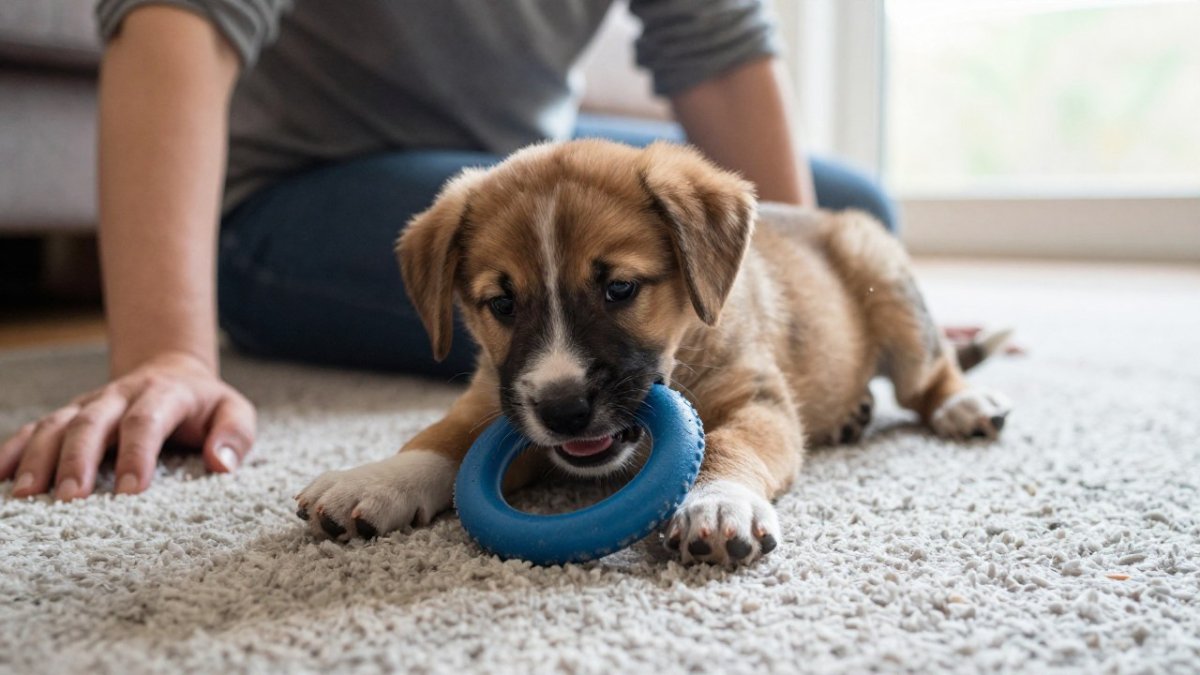
Choose firm rubber teething toys made for puppies, sized so the puppy cannot swallow them whole, and with no small parts that could detach. Frozen damp washcloths or a chilled, puppy-safe rubber toy can soothe gums. Avoid rawhide, hard antlers, bones that can splinter, and toys with strings or squeakers that can be pulled off. Rotate toys every few days so they stay interesting, and supervise chewing until you know how your puppy handles each item.
When should I contact a vet about my puppy's teeth?
Contact your vet if baby teeth have not fallen out by about 7 months, if adult teeth appear crooked or crowded with a retained baby tooth beside them, or if you notice bleeding, swelling, pus, bad breath that is unusually strong, or a puppy that stops eating. Retained baby teeth can cause crowding and plaque buildup, and a vet can decide whether extraction is needed. Early checks make these problems easier to manage.

