

Table of Contents
- Why Premium Dog Shirts Cost More: The Short Answer
- Where the Money Actually Goes: A Cost Breakdown
- The Best Fabric for Dog Shirts (and What Cheap Ones Skip)
- Dog Shirt Sizing and Fit: Why a Real Fit Costs More
- Premium vs Cheap Dog Shirts: What the Price Difference Buys
- How to Wash Dog Shirts So They Last (and Why Care Affects Cost)
- Cost Per Wear: The Math That Changes the Verdict
- A Practical Quality Checklist Before You Buy
- Frequently Asked Questions
Last Updated: October 21, 2026
Why Premium Dog Shirts Cost More: The Short Answer
Premium dog shirts cost more because better materials, real fit testing, stronger construction, and small production runs all cost more to deliver.
A cheap dog shirt and a premium one can look identical in a photo.
Premium dog shirts are garments built around fabric quality, a measured fit, and construction that survives repeated washing.
Below, we walk through the actual cost drivers and give you a checklist to spot the difference before you buy.
Where the Money Actually Goes: A Cost Breakdown
A premium brand's price is the sum of six cost buckets, each behaving differently. Here is how the money actually splits, using the logic any apparel producer works from rather than invented dollar figures.
| Cost Bucket | What It Covers | Why Premium Costs More | Why Cheap Cuts Here |
|---|---|---|---|
| Fabric | Fiber content, weight, stretch, dye lot | Longer-staple cotton, quality blends, and consistent dye lots cost more per yard | Thin poly blends, loose weave, inconsistent dye lots |
| Pattern development | Sampling, fitting on real dogs, revisions | Multiple body-type patterns and fit rounds | One generic pattern scaled up and down |
| Labor | Cutting, sewing, seam finishing, hardware setting | Reinforced seams, smooth finishes, hardware checks | Basic overlock, minimal handling |
| Production run size | Setup cost spread across units | Small runs spread setup over fewer units | Huge runs spread setup thin |
| Shipping and duties | Freight, customs, packaging | Smaller batches ship less efficiently per unit | Container-scale freight |
| Retail margin | Wholesale or direct-to-consumer markup | Brand absorbs returns and guarantee costs | Thin margin, minimal service |
The Fabric Line
Fabric is the most visible line but rarely the largest. Longer-staple cotton resists pilling because fewer fiber ends work loose, and a small percentage of elastane adds stretch and recovery. Dye lot consistency matters too: a premium brand buys enough of one lot to keep colors matched across sizes, while a cheap brand may switch lots mid-run.
The Pattern and Labor Lines
This is where the real gap sits. A pattern built around chest girth, back length, and leg opening requires sampling on real dogs, fitting, and revision. Labor follows: dense stitching, reinforced stress points, and smooth seam finishes take more machine time than a basic overlock pass. Hardware adds a per-unit cost and a quality-check step.
The Production Run Line
Setup cost, pattern grading, cutting, machine setup, is fixed. Spread across 10,000 units it disappears into pennies; across 500 units it becomes a real per-unit number. Small runs also catch problems a mass producer never sees, and that cost lands in the price tag.
The Shipping and Retail Lines
Small batches ship less efficiently per unit than container-scale freight. Returns and guarantee costs are also baked into premium pricing: a brand that stands behind its product prices in the cost of replacing the occasional failure.
The Best Fabric for Dog Shirts (and What Cheap Ones Skip)
The best fabric for dog shirts is a breathable cotton or cotton-rich blend that stretches slightly and holds its shape after washing. Pure synthetic blends feel cheaper to make, but they trap heat and pill faster.
Cotton, Blends, and Fabric Composition Labels
Read the composition label first. A premium shirt lists a clear fiber breakdown; a cheap one often hides behind vague terms.
Look for:
- A stated cotton percentage, not just "soft fabric"
- Blends that name each fiber (cotton and elastane, for example)
- Care instructions printed on the label, not just a hangtag
Fabric composition drives cost directly: longer-staple cotton costs more than short-staple, and stretch fiber adds cost but improves comfort and fit. Cheap shirts skip this, using the least expensive blend that photographs well.
Breathability, Stretch, and Sensitive Skin
Dogs don't sweat like people. They rely on panting and a thin coat to regulate heat. A shirt that traps heat works against them.
Breathable fabric lets air move. A little stretch lets the shirt flex when your dog runs, sits, or rolls. Both cost more than stiff, non-stretch fabric.
Sensitive skin matters too. Rough seams and scratchy fabric cause itching and irritation, especially under the front legs and around the collar, so feel the fabric and check the seams before you commit.
Dog Shirt Sizing and Fit: Why a Real Fit Costs More
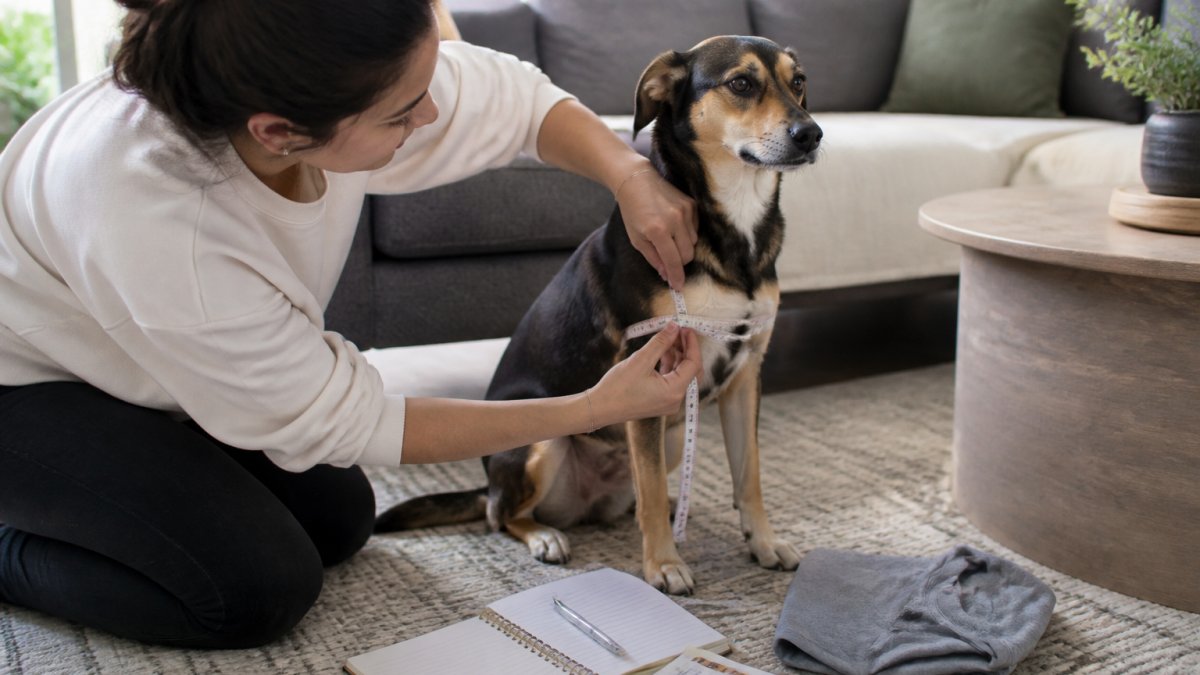
A real fit costs more because it requires measured patterns, multiple size options, and fit testing on real dogs, not a single generic cut. The payoff is a shirt your dog can move in without gapping, pulling, or rubbing.
Why Breed Variation Breaks Generic Sizing
Dogs do not scale like people. A barrel-chested bulldog and a narrow-chested whippet can weigh the same and need completely different patterns. Weight-based sizing fails because it ignores chest girth, back length, and neck-to-tail proportion.
Premium brands build patterns around body type, not weight. That means chest girth measured separately from back length, size charts with real measurements rather than S/M/L alone, and adjustable closures for in-between shapes.
How to Measure Your Dog Correctly
Use a soft tape measure and take three readings:
- Chest girth: the widest part of the ribcage, just behind the front legs
- Back length: from the base of the neck to the base of the tail
- Neck circumference: where the collar sits
Measure with the dog standing, not sitting, and keep the tape snug but not tight. If your dog falls between sizes, size up on chest girth and use an adjustable closure rather than sizing down on length.
What Adjustable Design Buys You
Adjustable closures, snaps, hook-and-loop tabs, or elastic panels, add cost but solve the in-between problem. They also accommodate weight fluctuation and coat changes between seasons. A shirt with no adjustment must fit perfectly on day one or it never will.
The Hidden Cost of a Bad Fit: Returns
A poorly fitting shirt usually becomes a return. Return shipping, restocking, and processing are real expenses that premium brands price in, part of why a well-fitting garment costs more. For you, the math is simple: a shirt that fits is worn; a shirt that gaps or pulls ends up in a drawer.
Premium vs Cheap Dog Shirts: What the Price Difference Buys
Premium vs cheap dog shirts comes down to four things: fabric density, seam strength, hardware quality, and design originality. The price gap pays for durability and comfort you can measure over time.
Construction Quality: Stitching, Seams, and Hardware
Turn the shirt inside out. That's where construction quality lives.
Look for:
- Dense, even stitching with no loose threads
- Reinforced stress points at the neck and leg openings
- Smooth seam finishes that won't rub
- Hardware (snaps, buttons) that feels solid, not flimsy
Cheap shirts often use minimal stitching and skip reinforcement, those are the seams that split first. A well-built shirt holds its shape and color through many wash cycles; a poorly built one pills, fades, and frays early.
Design also factors in. ThoughtMerch builds designs around real dog mom experiences, tested in community group chats before release.
How to Wash Dog Shirts So They Last (and Why Care Affects Cost)
Washing a dog shirt correctly means cold water, a gentle cycle, and air drying. Proper care stretches a shirt's lifespan and lowers its real cost per wear.
Follow these steps:
- Turn the shirt inside out before washing
- Use cold water and a mild detergent
- Skip fabric softener, which coats fibers and reduces breathability
- Air dry when possible, or use low heat
- Wash separately from items with zippers or hooks
Care affects cost because it affects replacement frequency: a shirt cared for properly lasts far longer than one thrown in a hot dryer every week. Check the label, premium brands print clear guidance because they expect the shirt to last, while cheap shirts often skip detailed care info.
Cost Per Wear: The Math That Changes the Verdict
Cost per wear is the price of a shirt divided by the number of times your dog wears it. This simple math often flips the premium vs cheap verdict.
Here's a worked example with placeholder numbers:
- Cheap shirt at a low price, worn 10 times before it frays: high cost per wear
- Premium shirt at a higher price, worn 60 times: lower cost per wear
The exact figures depend on the shirt, but the principle holds: a shirt that lasts six times longer wins on cost per wear even at a much higher sticker price.
A Practical Quality Checklist Before You Buy
Use this checklist to judge any dog shirt before you spend.
- Fabric composition is clearly stated on the label
- Cotton or a quality blend leads the fiber list
- Size chart lists chest girth and back length, not just weight
- Multiple sizes cover different body types
- Seams are dense and even when viewed inside out
- Stress points at neck and legs are reinforced
- Hardware feels solid and closes cleanly
- Care instructions are printed and specific
- Design feels original, not a generic graphic
Score each item yes or no. Six or more yes answers signals a shirt built to last. Fewer than four is a warning sign.
This checklist is the fastest way to separate real quality from marketing claims about fabric or fit that fall apart on inspection.
The real challenge isn't finding a dog shirt. ThoughtMerch builds expressive, high-quality apparel for dedicated dog moms, with designs based on real experiences and tested in community group chats before they ever ship.
Frequently Asked Questions
Are expensive dog shirts actually worth the price?
It depends on how often your dog wears one. A premium dog shirt typically uses tighter fabric quality control, reinforced stitching, and a fit tested across body types, so it holds shape and print through more washes. If the shirt is worn weekly for walks or errands, the cost per wear drops fast and the higher price is easier to justify. For an occasional costume or one-off photo, a cheaper option may be enough. Judge by wear frequency and how much fit and comfort matter to your dog.
How can you tell if a dog shirt is good quality before buying?
Check four things. First, the fabric composition label: a high cotton content with a small amount of stretch usually signals better breathability and recovery. Second, the stitching: flat, dense seams with no loose threads or skipped stitches. Third, the fit chart: measurements for chest girth and back length, not just weight ranges. Fourth, care instructions and any quality guarantee. A brand that publishes sizing detail and stands behind the product is usually a safer bet than one that only shows styled photos.
What is the best fabric for dog shirts?
Cotton and cotton-rich blends work well for most dogs because they breathe and feel soft against skin. A small percentage of elastane adds stretch so the shirt moves with your dog instead of pulling at the shoulders. Avoid stiff, scratchy synthetics and heavy prints that trap heat. If your dog has sensitive skin or itches easily, look for smooth, breathable fabric and seams that sit flat rather than rubbing. Fabric composition matters more than the graphic when it comes to comfort.
How do you wash dog shirts without fading the print?
Turn the shirt inside out, wash cold on a gentle cycle, and skip the dryer. Heat is what cracks prints and shrinks cotton. Use a mild detergent and avoid fabric softener, which coats fibers and dulls the print over time. Hang or lay flat to dry. For graphic dog shirts, washing inside out protects the design from friction against other items in the drum. Following the care instructions on the label is the simplest way to extend product lifespan and protect your investment.
