

Table of Contents
- Why Comfortable Shirts Matter for Long Dog Walks
- Best Fabric for Dog Walking Shirts
- Choosing the Right Fit for Active Movement
- How to Style Everyday Graphic Tees for Dog Walking
- Dog Mom Outfit Ideas for Hiking and Extended Walks
- Common Mistakes to Avoid When Selecting Dog Walking Apparel
- Caring for Your Dog Walking Shirts
- Frequently Asked Questions
Last Updated: October 4, 2026
Why Comfortable Shirts Matter for Long Dog Walks
Comfortable shirts for long dog walks aren't just about looking good, they're about functioning well during hours of movement and unpredictable weather. The right shirt keeps you cool, dry, and protected from the elements while moving freely as you manage a leash and adjust your pace.
Most people settle for whatever's in their closet rather than intentionally choosing apparel designed for active movement. The best comfortable shirts for long dog walks combine practical fabric technology with thoughtful design that anticipates what your body and lifestyle actually need.
This guide covers fabric choices, fit considerations, styling options, and care practices that keep your investment lasting.
Best Fabric for Dog Walking Shirts
The fabric you choose determines whether your shirt works for you or against you during a long walk.
Moisture-Wicking vs. Absorbent Fabrics: The Physiological Difference
Cotton and cotton-rich blends are absorbent, pulling moisture into the fiber where it sits against your skin. Cotton can hold up to 27% of its own weight in water, creating a clammy, heavy feeling during extended walks and losing its insulating properties as it saturates.
Synthetic blends and performance fabrics (polyester, nylon, or polypropylene) are hydrophobic, moving sweat along the fiber surface where it evaporates. This wicking process keeps fabric dry against your skin. A 60/40 cotton-polyester blend performs significantly better than 100% cotton.
Breathability and Evaporation: Working Together
Moisture-wicking only works if the fabric also allows evaporation. A tightly woven synthetic that wicks moisture but doesn't breathe will trap sweat in the outer layer, creating a damp microclimate.
The best fabrics combine wicking and breathability. Look for "four-way stretch" or "engineered mesh" in underarm and side panels, where heat buildup is greatest during leash-holding.
Mid-weight fabrics (5-7 ounces) offer the best balance for dog walking: they breathe adequately, dry quickly, and hold up to repeated washing.
Durability and Weight Considerations
Mid-weight, pre-shrunk fabrics maintain fit wash after wash. Look for reinforced seams and quality stitching at stress points where the leash might catch.
Solution-dyed fibers (where color is added before the fiber is formed) fade more slowly than surface dyes and resist chlorine and UV degradation.
Choosing the Right Fit for Active Movement
A shirt's fit determines how freely you can move and prevents fatigue and chafing during extended walks.
Ergonomic Design for Leash Holding
Dog walking involves repetitive arm positioning while holding a leash. Understanding how your shirt should fit prevents shoulder fatigue and chafing.
Sleeve fit and bicep room are critical. The ideal sleeve allows at least two fingers of space between your bicep and the fabric when your arm is bent at 90 degrees, preventing restriction without excess bunching.
Underarm gussets and side panels allow fuller range of motion. Shirts with reinforced underarm panels or four-way stretch prevent pinching during extended walks.
Shoulder seam placement affects torso rotation. Ideal placement is directly at the edge of your shoulder bone, allowing arm rotation without seam pulling.
Leash-Specific Functionality and Design
Cross-body leash wear creates friction points. A longer hem hitting mid-hip prevents the shirt from riding up and bunching under the leash.
Pocket placement and depth matter. Look for pockets at hip level, deep enough to prevent items from shifting and creating bulk.
Fabric bunching under harnesses is a real issue if your dog wears a harness and you're adjusting it frequently or if the leash attachment point creates friction. A shirt with a slightly stiffer fabric (mid-weight rather than ultra-lightweight) resists bunching better. Seams should be flat-felled or reinforced rather than simple overlocked stitching, which can create ridges that catch under harness straps.
Fit Across Body Types
The relaxed fit works well for dog walking because it doesn't restrict movement across your shoulders and arms. You need freedom to extend your arm fully when managing the leash, bending to pick up after your dog, or adjusting your pace. A crew neck sits comfortably without feeling restrictive, and it's forgiving across different body types.
Fit also affects how the shirt responds to layering. If you're planning to walk in changing weather, a slightly loose fit accommodates a lightweight layer underneath without bunching or creating bulk at the waist. However, "relaxed" doesn't mean oversized, excess fabric creates its own problems, shifting during movement and creating drag. The goal is a fit that skims your body without clinging.
For people with broader shoulders or larger frames, look for shirts cut with a slightly wider torso that doesn't taper aggressively at the waist. For smaller frames, ensure the armhole isn't so large that it creates excess fabric under the arm, which bunches during leash-holding.
How to Style Everyday Graphic Tees for Dog Walking
Graphic tees designed for dog moms work best when they're paired with pieces that support movement and weather-appropriate layering. The styling approach depends on where you're walking and what season it is, but the principles stay consistent.
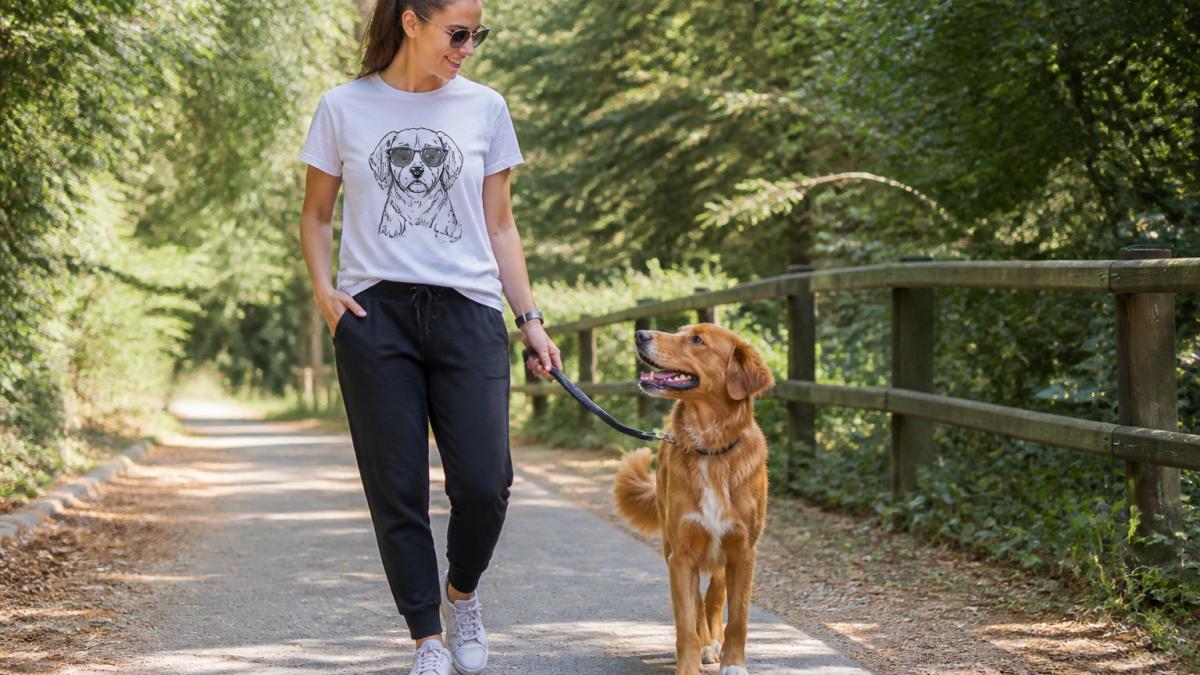
Start with a fitted or relaxed-fit graphic tee in a moisture-wicking blend. Pair it with comfortable, flexible pants, joggers, athletic leggings, or relaxed jeans with stretch.
Add a lightweight jacket or cardigan that you can tie around your waist or remove easily. This gives you flexibility as your body temperature changes during the walk.
Footwear matters more than many realize. Choose shoes with good grip and support designed for walking, not just casual wear. Your feet absorb impact with every step, and proper support prevents fatigue that radiates up through your legs and back.
The key to successful styling is choosing pieces that move together. Your shirt should work with your pants, your jacket should layer easily over both, and everything should prioritize comfort over appearance.
Dog Mom Outfit Ideas for Hiking and Extended Walks
Hiking and extended walks demand more intentional outfit planning than casual neighborhood strolls. These activities last longer, cover rougher terrain, and expose you to more dramatic weather changes.
Layering for Changing Weather
Start with a moisture-wicking base layer, your graphic tee in a performance blend works perfectly here. Add a lightweight mid-layer like a fleece or thin pullover that you can remove if you warm up. Top it with a weather-appropriate outer layer: a windproof jacket for cool weather, a water-resistant shell for potential rain, or a lightweight vest for mild conditions.
The layering approach lets you adjust without carrying extra weight. Remove the mid-layer and tie it around your waist if you heat up. Add it back if the temperature drops. This flexibility keeps you comfortable throughout a changing day.
Choose colors and patterns that work across layers. Neutral base colors let you layer different pieces without visual conflict. A graphic tee in black, gray, or white coordinates easily with jackets and outer layers in any color.
Sun Protection and Visibility Features
Extended time outdoors means extended sun exposure. Look for shirts with UV protection built into the fabric, or choose darker colors that naturally block more UV rays. A lightweight, long-sleeved option offers maximum protection while staying cool through breathable, fast-dry fabrics.
Visibility matters on longer walks, especially if you're walking near roads or in areas with vehicle traffic. Bright colors or reflective elements on your shirt or jacket make you more visible to drivers. This becomes increasingly important during early morning or evening walks when daylight is limited.
A baseball cap or wide-brimmed hat protects your face and neck from direct sun while improving visibility. Sunglasses reduce glare and protect your eyes during hours outdoors.
Common Mistakes to Avoid When Selecting Dog Walking Apparel
The most expensive mistake is choosing a shirt based on appearance alone and ignoring how it actually functions during activity. A beautiful graphic tee that doesn't breathe or move with you becomes unwearable within the first 20 minutes of a walk.
Another common error is underestimating durability needs. A shirt that falls apart after five washes costs more in the long run than investing in quality upfront. This is where many people get frustrated, they've bought multiple cheap dog mom shirts and none lasted, so they assume all dog mom apparel is disposable.
Ignoring fit leads to discomfort that compounds over a long walk. A shirt that's too tight restricts movement. One that's too loose creates bulk that shifts and bunches. Taking time to find your actual fit, not just your size, changes the entire experience.
Many people also overlook weather-appropriateness. Wearing a heavy cotton shirt on a warm day or a thin layer in cool weather creates discomfort that no amount of style can fix. Matching your shirt choice to the season and expected conditions is fundamental.
Caring for Your Dog Walking Shirts
How you wash and care for your shirts determines how long they actually last. This is where many people inadvertently destroy quality pieces.
Wash in cold water with like colors to prevent dye bleeding. Hot water breaks down fabrics faster and can set stains permanently.
Use a gentle cycle and mild detergent. Heavy-duty detergents are unnecessary and can damage moisture-wicking properties.
Dry on low heat or air dry whenever possible. High heat damages elastic fibers and can shrink even pre-shrunk fabrics. Many people hang-dry their quality pieces to extend lifespan significantly.
Store in a cool, dry place away from direct sunlight. Sunlight fades colors over time, even when the shirt isn't being worn.
Treat stains promptly before washing. Mud and grass stains set during heat drying, so address them while the shirt is still wet.
The difference between a dog walking shirt that lasts one season and one that lasts five comes down to intentional choices about fabric, fit, and care.
Frequently Asked Questions
What should I wear for long dog walks?
Wear a comfortable shirt made from breathable, moisture-wicking fabric like ring-spun cotton or a performance blend. Pair it with lightweight, durable pants or shorts that allow free movement. Choose a crew neck or relaxed fit to avoid chafing from your leash, and opt for neutral or UV-protective colors if you'll be out in the sun for extended periods. The key is all-day comfort that supports high-exertion activity without restricting your movement.
Are cotton shirts good for long walks?
Quality cotton works well for dog walking if it's the right type. Ring-spun cotton is softer and more durable than standard cotton, and pre-shrunk options maintain their fit through repeated washing. However, heavyweight cotton can feel heavy when wet with sweat. A performance blend that combines cotton with synthetic fibers offers better moisture-wicking while keeping the breathable feel of cotton, making it ideal for longer outings where temperature regulation matters.
How do I choose a comfortable shirt for outdoor activities with my dog?
Look for shirts with ergonomic design that won't bunch or chafe during active movement, especially around the shoulders and underarms. Verify the fabric is breathable and fast-dry to handle moisture from sweat or unexpected weather. Check that the fit allows arm freedom for leash handling without excess fabric that could catch. Consider four-way stretch or chafe-resistant seams if you walk frequently. Test the fit with your arms extended and simulate holding a leash to ensure comfort during real-world use.
What features should I look for in dog walking apparel?
Prioritize moisture-wicking and breathable fabrics for temperature regulation during active movement. Choose a relaxed or unisex fit that allows freedom for leash handling without excess bulk. Look for durable construction with reinforced seams that withstand repeated washing. Consider UV protection or sunproof features if you walk during peak sun hours. Odor-resistant or fast-dry technology is valuable for high-exertion outings. Finally, ensure visibility features like bright colors or reflective elements if you walk during dawn, dusk, or evening hours for safety.
